
Protect Your Margins
Recipe Costing & Food Cost Software for Caterers
Build an ingredient library, attach recipes to your menu items, and let Puree work out exactly what every dish costs you — and the margin you're making on it.
An Ingredient Library That Knows Its Costs
Start with the things you buy to cook with — cream, flour, eggs, salt. Each ingredient carries a cost per unit and the unit it's measured in, so it can be costed wherever it's used.
Group ingredients into categories to keep a long pantry navigable, record the supplier and brand you usually buy, and let Puree estimate a starting cost when you'd rather not type every line by hand.
A built-in duplicate finder spots near-matches like "cream" and "double cream" and merges them into one, so your costs stay consistent everywhere they're referenced.
Scalable Recipes, Real Food Costs
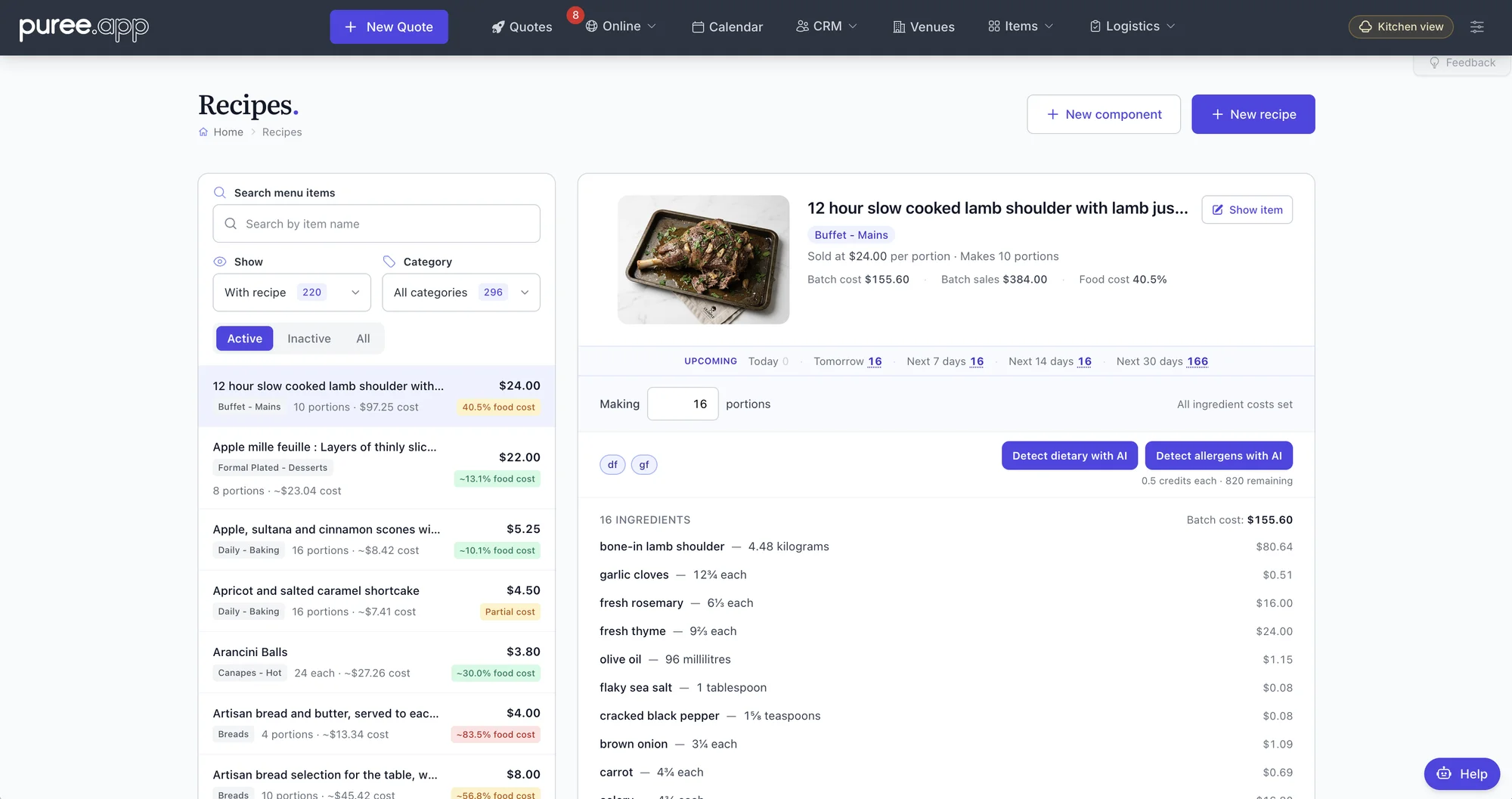
Attach a recipe to any menu item: add ingredients with quantities and Puree adds up the cost as you build. Give the recipe a base yield and scale it to any batch — a recipe written once works for a dinner for 8 and a wedding for 280.
Against the item's selling price, Puree shows your margin, colour-coded so thin and loss-making dishes stand out. A Food cost column on the menu list lets you scan your whole range at a glance.
See the Margin on Every Quote
Once your dishes are costed, Puree adds up what each quote will cost you to make. Every section of the quote shows its estimated cost and margin under the total, so you know a quote is worth sending before it goes out.
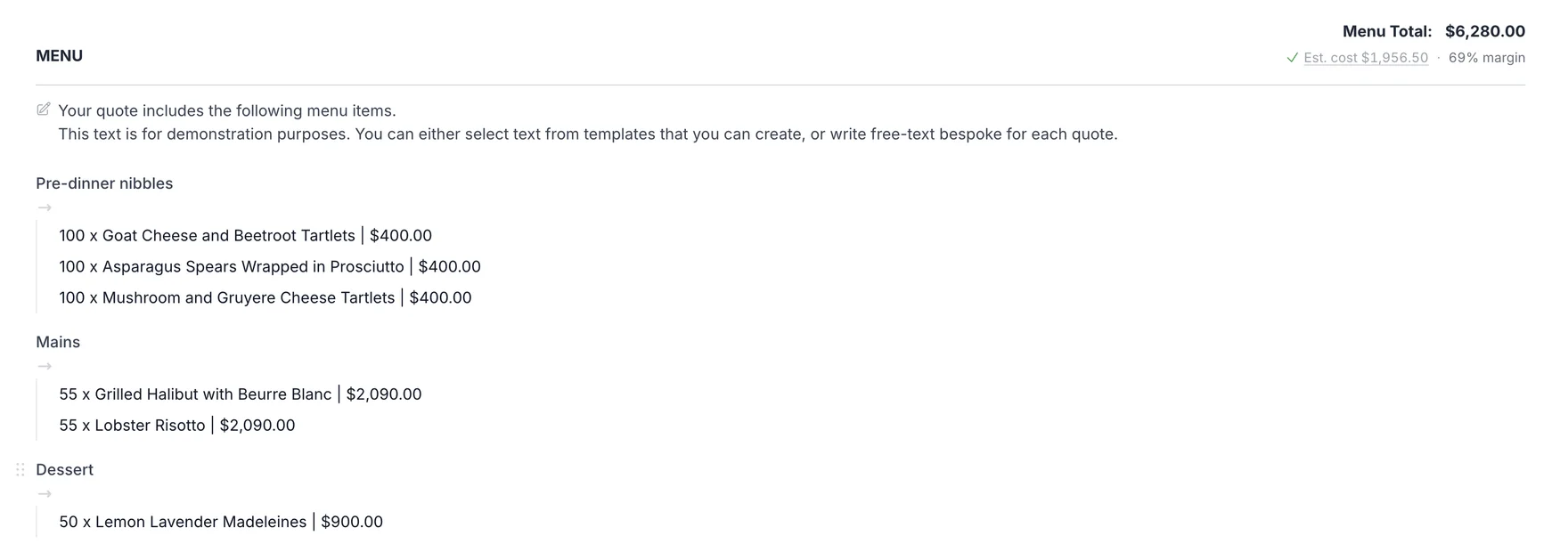
Margins are for your team only and never appear on anything a customer sees. Switch them on under Account details, Costs & margins.
Supplier Price Lists, Scanned For You
Keeping costs current is the chore everyone avoids, so Puree does the typing. Upload a supplier's price list — a PDF, or even a photo of a printed sheet — and Puree reads each line, pulls out the product, pack size and price, and matches it to your ingredients.
You review the matches before anything changes, then apply. When a cost moves, every recipe and dish that uses that ingredient re-costs automatically — so your margins stay honest without the busywork.
Sauces, Doughs and AI That Does the Legwork
Write a sauce, a stock or a pastry once as a component recipe and use it inside any dish. Change the component and every dish that uses it re-costs with it.
Short of a price? Puree's AI can estimate a starting cost, research a current one, import a recipe from a web page, and check a recipe's ingredients for allergens, so a new dish is costed and labelled in minutes, and you review everything before it's saved.
Price with confidence
See your real food cost on every dish before the quote goes out.